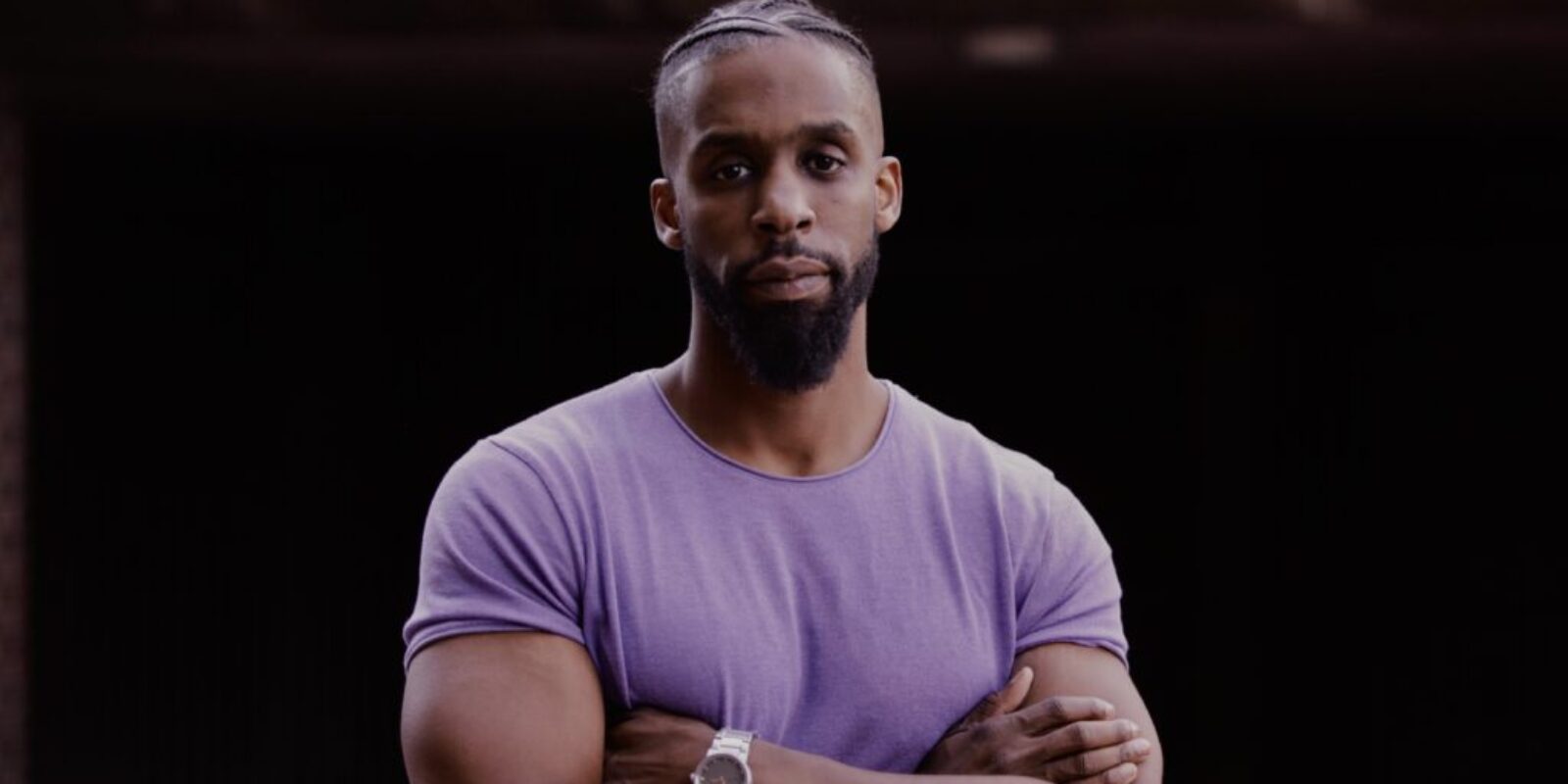
Meet Tyson Joseph
Tyson Joseph is a film producer, inspirational speaker, director and co-founder of the London-based production company Stories Like Us. The unit have produced and created an impressive catalogue of films surrounding the topics of mindfulness and mental health, often with top celebrities including Goldie Hawn and Ruby Wax appearing to offer their own experiences on the subject. As a driving force for positivity and hope, his self-funded film ‘I Am Not Your Villain’, created for the UK charity Changing Face, prompted the British Film Institute to adopt a new policy, aiming to end the funding of films in which the villains or “bad guys” suffered facial disfigurements, thus ending the perpetuation of a negative stereotype that has plagued cinema for decades.
Joseph began his career working as part of an award-winning team at MTV, splitting his creative talents between New York and London while working on hugely successful campaigns for top brands including Land Rover, Paul Smith, Google, Topshop and Tom Ford. It was a health scare 10 years into his career that set Joseph off on a new path, leading him to set up London-based production company, Stories Like Us, with the aim to tell inspirational stories that move, affect, and change people, focusing on wellbeing, optimism and hope.
Since the creation of Stories Like Us, Joseph has become constantly in demand as the go-to creative mind for mindfulness and wellbeing projects, working with Goldie Hawn for ‘Mind Up’, Ruby Wax’s ‘Frazzled Tour’ and producing well-received films for the NHS and UK Government. Recent projects include two televised projects, ‘The Science of Kindness’, and feature-length documentary ‘Mind the Gap’. When he’s not working on new film and TV productions, Joseph is a passionate and inspirational speaker, talking convincingly about the path to overcoming adversity, the importance of resilience, and the power of chasing dreams and telling our own personal story.
Extract taken from the transcript of the podcast recording
TJ [00:01:36]So I am a producer. I fundraise for independent TV shows, and films. I think stories are therapy. I think stories are one of the best ways we have of transforming ourselves. A group or an idea absolutely obsessed with storytelling. [20.2s]
TJ [00:02:58]Yeah. So Jack Randall’s book, White Fang, is about this wolf, that is abandoned as a cub. It meets this guy who takes it in. And that’s the kind of rite of passage of this man as he befriends this young wolf. And they go off together and have their own kind of adventure journey. And at the very end of this story, he has to set this wolf free. And I would have been about ten years old, heavily dyslexic, learning to read with this book. And I remember this was the book where I was learning what a paragraph was. And I had to give a report at the end of every single book to this woman who was teaching me how to read. So ADHD, dyslexia, having a really hard time. But this book just takes something inside. And I remember saying to her at the end of this book, like, I think I’m the wolf. Wow. I think I’m the wallflower. I feel like all the stuff that was going on in my childhood, which felt unfair. Right? What if it was like training me for something else? And like, that was the rejection was about strength and resilience and something else. And this woman has had a tear come down her face. And again, this is the most non-emotive woman. [79.9s]
TJ [00:07:23]There’s just before we started recording, you said this thing which really resonates, wherever you are now, you’ll find another version of yourself down the lane. So to answer your question, there’s been multiple moments which are different. Um, there’s like a different potency of the same feeling. So I’ve had very small versions of it, to larger and larger versions. Some are quiet, some loud, some are me and one person in the room, some are of a full crew. But one of the earliest ones, career wise would have been, I started as a runner, an agency and I had worked for the production team. [72.9s]
FD [00:08:36]So many people forget that actually they like to tell the story rather than actually listen. And this is why we did the podcast. The people can listen it. [8.7s]
TJ [00:08:45]Well. I think that’s where the magic is, that I know what I know. So when I hear you like you’re going to unlock one of my thoughts or you’re going to give me a new one, Do you know what I mean? [8.0s]
FD [00:12:38]Yeah. And I think what I’m hearing you talk about a lot, you’ve got some intrinsic self-belief in terms of how you seem to operate naturally. And working in the creative industry is you need a lot of that. It’s not necessarily known as a conventional career. Have you had any moments during your journey so far where you’ve just thought, I need I wish I did something conventional? You know, this is it’s takes so much of myself within this journey. Why can’t I just go and work in the finance industry and take home a massive paycheque? You know, how has your journey been compromised in those ideas of what it is you want to achieve? And I know that you’re engaged in getting married and all the external pressures as we get older, compile in and the bigger dream gets compromised. And I wondered how that sort of plays out for you and if you’ve ever had those feelings of like, I need to do a 360 on this. [56.0s]
TJ [00:26:26]So that I have a mindfulness and I have a contemplative practice for sure. So I do, I do meditate, I do journal, I do like for lack of a better word, is prayer work. And that’s not praying to something out there. It’s more an affirmative way of talking to myself. So I will pretty much every day do a version of just reflecting on things that I know to be true. Like, I know, like, I just look out my window. You can see that there is a wisdom, there is an intelligence, there’s a beauty, there is abundance. And I will reflect on that daily to remind myself that if it’s true out, there has to be true in my mind that has to be activated. So you call it forwards. I mean, so that I do that, that’s daily. And then on Sundays, Sundays is always a review day. So I take an hour on a Sunday normally in the morning, and it can just be bullet point some Sundays of just like looking back at the last week like whether I when what could I learn what was happening and then pretty much every month so like the last Sunday of the month I read the following like the four that I wrote before this to see, like because it’s surprising when you do that, you’re like, I’ve been checking myself, man. [152.5s]
TJ [00:29:10]I feel so lucky. I feel so lucky because it you know what? Curiosity outweighed embarrassment. [12.1s]
FD [00:37:21]Yeah, exactly. I had a great chat with Mo Gilligan, an event in which he took me by surprise. [18.4s]
TJ [00:37:41]Listen, I thought every comedian has to have done the inner journey because they that level of observation and insight, you cannot have strayed into that and seen the humour, which is alchemy in of itself. Turn tragedy, pain into jokes. You have to be on the journey. Some path, you know. [19.5s]
TJ [00:38:48] I stopped posting on social media about a year ago and it was a deliberate thing. It was more of a quiet, quiet thing because I realised that I was in danger of just like success bombing, you know, like we’ve got this show, we’ve got this thing I’m shooting, I’m doing this thing and that, that’s fine, that can build. And I’ve got friends who are like, when they do it, I’m rooting for them, I’m cheering. I love it. And I love to see what you’re doing and where you are actually love it. But just where I am right now, this could change. It became a distraction for me. And so that was like, okay, well, I’m not that right now, so let me just release that. [64.8s]
FD [00:52:55]I love that you’re so, so right. So my last question, Tyson, is a biggie. What does becoming more human mean to you? [8.6s]
TJ [00:53:11]Becoming more human means to me. Embracing a bit more truth. Letting go of lies about yourself and giving yourself the permission. To giving yourself the permission to get wrong along the way, even though you tend to be right. Do you know? I mean. Becoming more human is realising the truth that we are all alone. In the same thing together, though. That’s the paradox of it all. We all have our own unique experiences of the same thing. That’s the truth within us, the same thing. I believe that beats my heart. So we have this thing that’s keeping us alive and it wants when we’re connected to our sense of purpose and fulfillment, we become more of ourselves. And as you become more of yourself, I’ve realised that there’s always this dance between there’s something that I need to embrace and there’s always something I need to let go. There’s never one without the other like. And so becoming more human is being gentle with that process of what do I need to embrace? And now what do I need to release? Whether that’s a habit, a relationship, changing your job, you are going to embrace something new and you’re going to have to let something go. And if you can just be kind, I’m saying it to myself and you can be kinder to yourself whilst you’re in that dance between embracing and letting go. I think you become more you become more human. And I think that’s what it is for me. [86.6s]