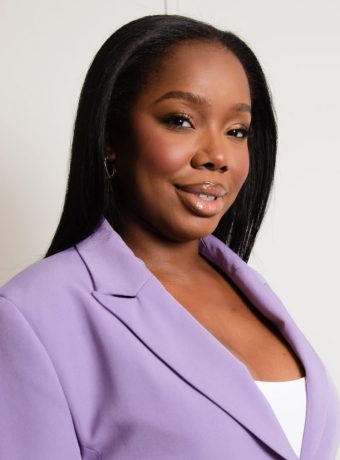
Meet Henry Holland
Henry Holland is known for his daring, eye-catching designs, fun personal style and cool, quirky collaborations. An expert in both high-street and high-end, his designs have been sold by retailers Harrods and Debenhams and have proven to be a firm favourite of many famous faces such as Alexa Chung. He gained attention in 2006 with his Fashion Groupies T-shirt designs, which featured bold, rhyming slogans like ‘I’ll Tell You Who’s Boss Kate Moss’ and ‘Cause Me Pain, Hedi Slimane.’ The fashion world took notice when designer Gareth Pugh appeared at the end of his London Fashion Week catwalk show wearing Holland’s tribute T-shirt to a fellow designer which read ‘Get Yer Freak On Giles Deacon’.
After 13 years in business, Henry called in the administrators and closed his fashion label House of Holland. “While I can’t assign full responsibility to the global Covid-19 pandemic, it certainly didn’t help. Things had been tough before that.”
Henry now runs a new business he created in lockdown and he’s now potty about luxury pottery, created and made in London and sold worldwide.
Extracts taken from the transcript of the podcast recording
HH [00:05:31]I have chosen a book, which is How to Lose Friends and Alienate People, which is a book by Toby Young, all about his life as a kind of celebrity journalist living in New York who was working for Vanity Fair and how that all unraveled. And it was kind of for me, it was the beacon of hope for me and the kind of journalism that I was wanting to eventually find myself in and, you know, a world that I wanted to be a part of, which was this kind of glamorised world of celebrity and films and actresses and actors and fashion. When I read that book, that was kind of a real driving force for me to kind of go through the stages that I was currently finding myself in of my journalism degree so that I could eventually find my way out because I think I saw school, I hated school, and I saw school like just this sort of restrictive place where I had to do as well as I needed to do to get to the next level. It was a bit like a computer game. So, you know, my GCSE is the level to get me to my A-levels, my A-levels where I did well enough to get to London. And then when I got to my course and I quickly realised I wanted to be doing a fashion course and then I tried to change my course and it, it was my motivation to stick with it and utilise my degree and make it into something that would be useful to me. So I then spent my entire three years at university working on the side for anybody who had the word fashion in the job title. I was doing assisting jobs, I was working with stylists, I was working in teen magazines on the side. And, you know, I was working seven days a week just trying to build up some sort of level of experience in the world of fashion to accompany this. What I felt like was the wrong degree so that once I did graduate, I would have something that resembled something that I would feel was useful. [131.8s]
HH [00:15:26]You know, there’s definitely that that burning desire that creates ambition, that creates drive, because I have something to say and I want people to hear it. [36.8s]
HH [00:17:16]Yeah, exactly. I mean, they’re obsessed with youth and I was living and working in this world that was kind of its own little pocket of the fashion world where I felt like I could be authentically myself. Nothing was taken too seriously. It was filled with fun and joy. Whereas when I sort of did my toe into these higher end versions of that world, I did start to feel like I would close myself down a little bit. I was worried that I would, you know, say the wrong thing, put my foot in it, you know, those kind of things. Whereas I just felt comfortable in this world of teenage fashion and just as a kind of side project. I started making these t shirts and it was kind of reflective of what me and my friends were wearing in nightclubs at the time. I was using nightclubs as a way to ingratiate myself into this different world of fashion that I wanted to be a part of. Because on the dance floor there were no eyres and graces. Everybody was much more comfortable, Everyone was more chatty, much more open, more friendly. And that’s kind of that was my initial Segway into the kind of more higher end world that I was wanting to be a part of. And then I made these T-shirts, which were rhyming couplets based on some of my idols in the fashion world. Like, do me daily Christopher Bailey etc. Kind of creating something that reflected me about that part of the fashion world. You know it was humorous, it was cheeky. It was a nod and a wink. In hindsight, what these T-shirts did Pre-social media was allow the fashion world who at the time were considered to be stuffy, bitchy, unfriendly, and pompous, allowed them to show that they had a sense of humor and that they were capable of laughing at themselves and that they were in on the joke. And so I think that’s what made them quite successful quite quickly. [129.7s]
FD [00:20:50]Yeah. How did the imposter syndrome during that time impact you? [3.2s]
HH [00:20:55]Look, I mean, luckily, I think I have enough focus and, and confidence in what I was doing and what I had to say, that I still feel like I had it to say. It didn’t stop me from continuing on the mission that I was on to kind of build a business and grow a brand and create something that was joyful and that was inclusive and it made people want to be a part of it and to buy into it. You know, it didn’t dampen that spirit, but it definitely on the sidelines knock my confidence at certain times in the back of my head. But. I mean, I was able to quieten it down enough. [41.8s]
HH [00:24:43]Absolutely. But I mean, both of those things, I think I’ve definitely been through a process of grief, you know, from losing something that I built, from being such a young age and for something that I lived and breathed for nearly 15 years. But I also I operate from a place of fun. I also love change. I find change exciting and I find if something changes I don’t focus on what’s gone. I focus on the opportunities that have been created from what that could be. I dunno, that’s how my brain is wired. But I also think it’s the way my mum instilled a complete belief system in me from a very young age, which as a kid I thought was embarrassing. And now I’m so grateful for the system. [50.2s]
FD [00:26:31]But I mean, we call it spiritual practice, but I guess you can call it I mean, anything you like. It doesn’t have to be spiritual, but understanding how to manifest and positive affirmations, whether it’s reading those books, is that something that you grew up with then that’s been very much positive for you as a person? [16.1s]
HH [00:26:48]It’s been ingrained in my belief system for as long as I can remember. I’m so fortunate I haven’t had to read the books because, you know, it’s just been the way I was taught to exist. So, you know, the importance of gratitude, the importance of engaging with the universe, the importance of, you know, acknowledging when the universe does provide for you and all of those things and that and, you know, trusting, believing that things will change, things will change at the right time. Things will come to you as and when you need them, whether that be positive or negative. [37.7s]
FD [00:30:15]Do you identify with the word failure at any points of your life or career so far? [49.6s]
HH [00:31:06]I think in business running a business, you experience levels of failure every day. And for me, the failures became instructions for my next endeavour. So they became okay. That didn’t work. Let’s not do that again. And so, you know, this is probably my biggest learning while running a fashion company like that didn’t work. Let’s not do that. Whereas the more day to day version of that would be like, Oh, let’s not make something in that fabric ever again, or let’s not launch something in that way, or let’s not spend this much money on that kind of website. You know, there are failures that occur because, you know, running a business operates on so many levels in tandem always, you know, whatever your your you know, kind of your business is, there’s so many different levels to it. And so there’s the tiny successes and the tiny failures every single day across every different section of your business in your brain. So I think, yes, this is probably the biggest one. [68.1s]
HH [00:33:57]So I absolutely love the terminology of evolution and revolution. That’s something that we always used to question about the way that we would do things. And in the brand, you know, is this an evolution or is this a revolution? So I definitely feel like I’m going through a revolution. I haven’t 100% figured out yet. I think one of the things that I loved and really served me well with my previous job was that I was able to do about 12 jobs every single day. You know, I could be a production manager in a patent cut marketer. You know, all of these different things, all within one day. And that really suited me because it allowed me to kind of be quiet and sort of hold my attention by keeping it interesting. And I think my my challenge is finding one really strong key direction and feeling strong enough about it that I know that that is my next revolution. [86.4s]
KY [00:35:24]So I’m going to ask you a question. Somebody asked me when I was in my fourth decade, and that was, Who do you want to be when you grow up? [9.7s]
HH [00:35:35]I asked. So, okay, keep talking about my mom. But I once asked her, How old were you when you felt like a grown-up? And she said, Still waiting. And she’s 76. And that’s my only answer. I don’t ever want to grow up because I think it’s you know, it’s a mentality. I think the way that I run my business is very much in a way that didn’t feel grown up and that made people question whether the seriousness of it. And that always frustrated me, frustrated me because I was always incredibly serious about my employees, the jobs I was creating, the money I was making. I was always very serious about that. But the way in which we did it, I didn’t have to be serious. So in terms of what I want to be when I grow up, I don’t think I want to grow up. That would be my answer. [50.7s]
HH [00:40:46]Thank you guys so much for that. Was like therapy. That was free therapy. Incredible. [4.2s]