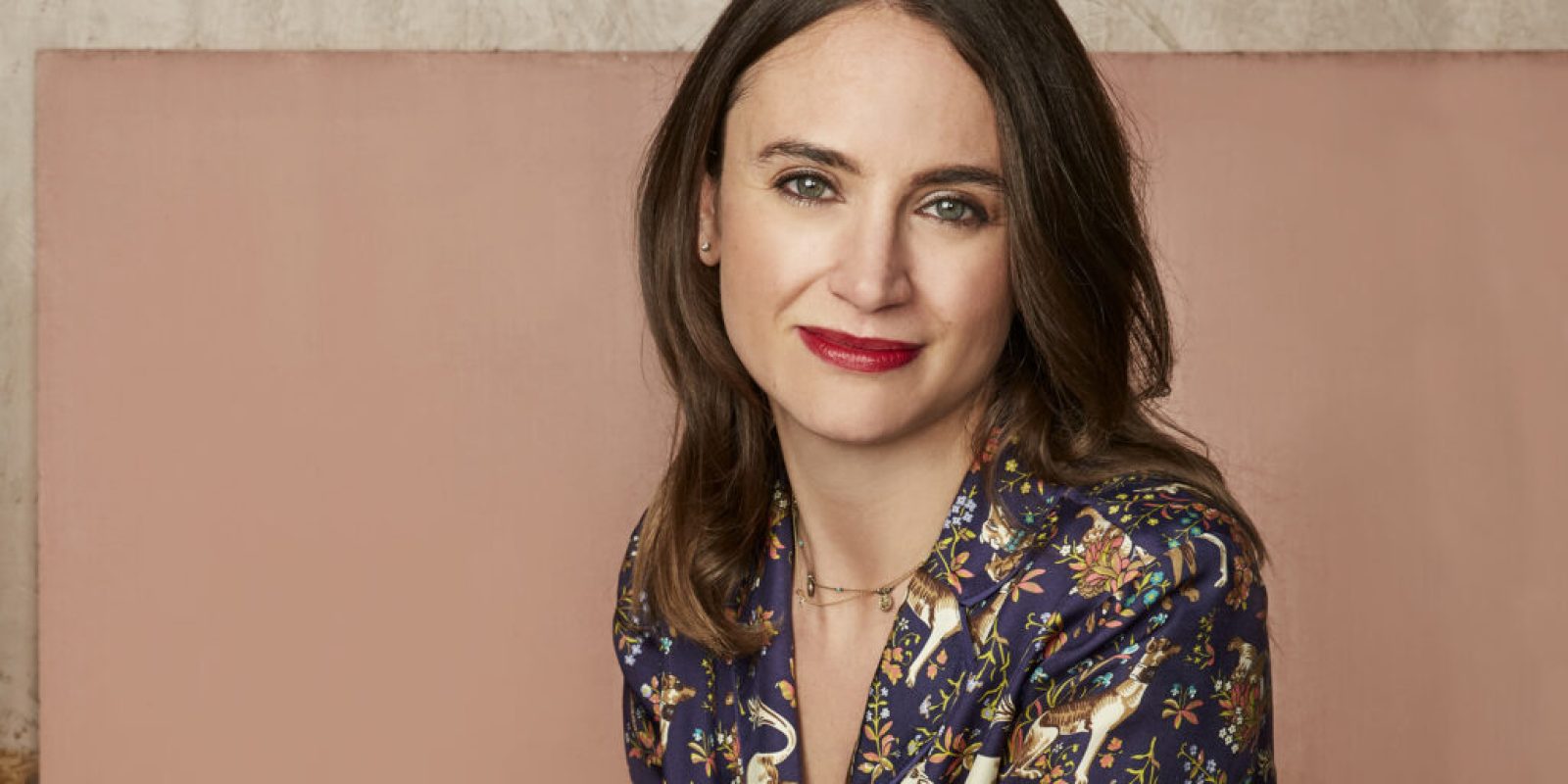
Meet Rhian Pownceby
Before establishing her studio in 2019, Rhian held creative roles across some of the world’s foremost luxury fashion brands including Ralph Lauren, Paul Smith and Anya Hindmarch. She also partnered and collaborated with well-known institutions such as Colette, Selfridges and Lane Crawford.
Rhian’s business, Rhian Pownceby Design is a luxury interior design and creative direction studio with an unwavering ability to create unique highly desirable contemporary spaces. We have twenty years of experience delivering tailored interiors and design for private homes and retail stores, as well as luxury experiences.
Extracts taken from the transcript of the podcast recording
RP [00:02:22]So I started working when I was 16 for Topshop, my love at the time, and I’ve worked through lots of different creative roles, well-known brands such as Paul Smith and Ralph Lauren, Anya Hindmarch and I studied history at university, so nothing is total fashion. I’m a total history geek. I love it. I was obsessed with it when I was younger, so and I didn’t really know what I wanted to be at that point. So I just went to university, did something that I loved. [30.7s]
FD [00:07:04]What a wonderful and interesting sort of career journey that you’ve had to that point to make those decisions. And I would imagine jumping to the creative industries at certain points was quite nerve-wracking. It’s not known to necessarily be the big money I know. Is that something that’s ever played a role in your decision making process in terms of your career? [19.3s]
RP [00:07:24]Yeah, absolutely. And it’s funny that you mention that because even within these creative positions, I always make sure that I position myself as a manager or a leader so that I would be involved in the weekly sales meetings, business reviews, so that I had the business development experience as well because I think a lot of the time from the outside, sometimes people can think you’re in a creative position, you know, you’re a bit away with the fairies doing your thing, designing, not thinking about where the money’s coming from. And that’s not true at all. You know, the walls that I was doing to aid sales, you know, it wasn’t only the stores which needed to look beautiful and I needed to look on brand on whatever project I was working on. But, you know, a lot of the time it still got to bring in the money. And so attending those meetings, which, you know, sometimes that was pushing me out of my comfort zone, I’m not necessarily a numbers person. I can do it, but it’s not my love. You know, spreadsheets are not my friend a lot at the time. [60.4s]
RP [00:15:06]Yeah, 100%. And I think actually always has been. And I feel very, very lucky for that. You know, I know you’ll speak to a lot of people who might like their job, but you know that they’re in a job to make money to pay for the things that they want to do and the way that they want to live. And I’m very lucky that I always thought I’m going to do something that I really love. I’m not willing to settle, as you know as well, in my work all my life, you know, all my personal life. To me, I was never it was never an option to follow a career that was purely going to make me money. And that was it. I needed to enjoy it. I needed to love it. And being creative and fashion and styling, all those things are part of me, that part of my personality, that part of my makeup. [130.0s]
FD [00:18:11]Turning up in life every day you have a child, you’re running a family, running a home, and you’re running a business. So there’s a lot going on. How do you stay grounded and what are your non-negotiables on your sort of daily or weekly to do list to help you stay balanced? [14.9s]
RP [00:18:27]Well, it was funny when I read this question because I do have them and then I realised I’ve not really been doing them. Right, okay, this is reminded me that I’ve got to, I’ve got to get back to making these non-negotiables. So again, it might sound a bit clichéd, but exercise and meditation for me are very important and I think people say that a lot and but when you practice it like we both do, fine. I can’t deny the impact it has on my body and mainly my mind. And so if I’m feeling stressed, if I’m feeling overwhelmed and I tell myself I don’t have time, I don’t have time to meditate, I don’t have time to do that class is pointless because I’m much more productive and I’m much happier and focus if I do those things. So I could waste 2 hours, or 3 hours trying to do something and I’m not quite getting it and I’m getting more and more frustrated. Whereas if I spent the time to do a 15 minute meditation and came back to it, you know, I’m calmer, I’m more relaxed. [59.4s]
FD [00:27:45]That’s what I’m keen to know. So what book doesn’t what book or what creative arts really inspires you? [5.0s]
RP [00:27:51]So. Well, Gaby Bernstein’s book, which links back to, you know, what we were just talking about before in that that completely changed my view on what and how to be successful. And I think we’ve spoken about this before as well, that I to me, success was the burnout. It was working so hard that it was no time for anything else that if I wasn’t working evenings and weekends after my son had gone to bed and did it, then I wasn’t going to get to where I wanted to be. And reading her book, it like totally flipped on the head. And it was like, Actually, you don’t need to do any of that. [34.8s]
FD [00:33:56]So lastly, then, Ryan, what does becoming more human mean to you? [3.5s]
RP [00:34:00]To think about this one? I think for me is learning to be more present so that I can feel how human I am if that makes sense. So I can actually listen to myself more, listen to my body, listen to my mind, rather than having that kind of fixed idea and what needs to be done when we sort of go and go and go and go and we just get carried along with life actually saying, How does my body feel today? What’s going to be the best job for me to do today, knowing how I’m feeling and actually, yeah, realising that I am human and what that means? And I’m just going back to the happiness thing as well. And that family is such a big part in that. And so learning to have that balance between your personal life and your career means that you can be fulfilled in both. And so that’s what being human means to me now, which I think if you’d asked me ten years ago, it would be something else. But that’s what’s important. And having the space and time to think about others as well, like with what my son has been through and, you know, there’s other charities that I’m involved in and having the space and time to be able to stop and think about other people as well. [79.4s]