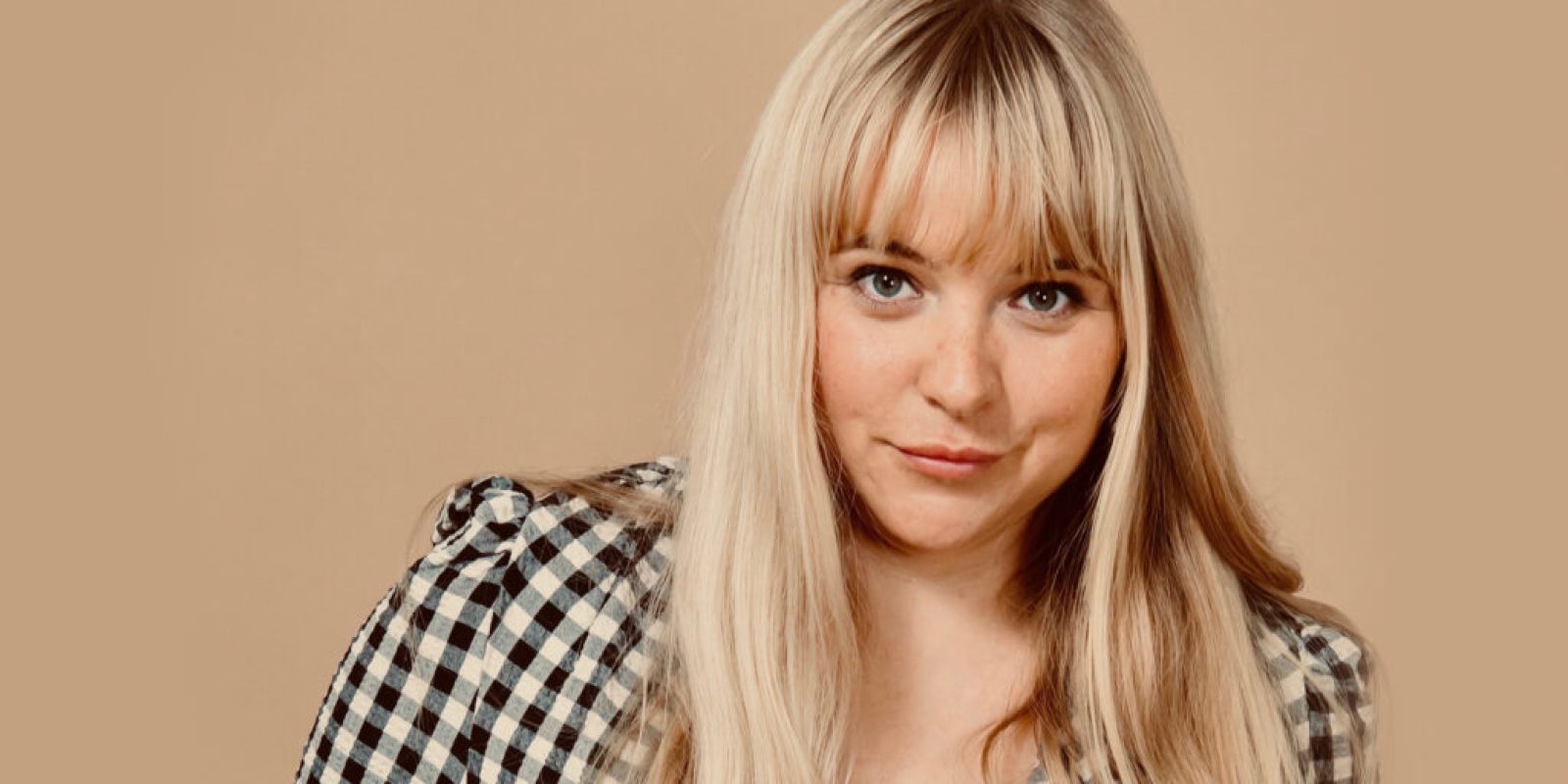
Meet Amy Thomson
Amy Thomson was born on 15 March 1987 in Norwich, Norfolk in the United Kingdom. In 2011, Amy founded her own communications agency SEEN, and became known for delivering live events and digital media for brands like Nike, RBS, and Instagram. In 2016, she suffered extreme burnout from work, and she was told it was all hormonal and never thought that stress can be hormonal and it will affect her cycle, sleep, mental and physical health drastically.
Amy started looking for a way to track her everyday mental and physical health and after paying a lot of money to nutritionists, trainers, and even coaches to have access to everyday health advice, she discovered that her periods stopped and her body wasn’t functioning properly due to stress. She realised that there are other women out there like her, and spending so much money to know about their bodies is not sustainable or realistic.
This motivated her to learn about the mind-body connection and create an app, MOODY, through which she share’s everything she has learnt to help other women.
Extracts taken from the transcript of the podcast recording
FD [00:01:17]It’s an absolute pleasure to have you on. Now, every week we dive straight in. So without further ado, please tell all of our listeners what is it that you actually do? [9.9s]
AS [00:01:29]I have a technology company called Moody, and what that does is allow women to track their everyday emotional, and physical health around hormone cycles. What it does is recommends that you like a weather forecast and different things you can do to effect a positive impact on your emotional, and physical health every day. So it’s all about owning your hormones, understanding them from a scientific perspective, and then being able to use health and wellness to essentially create healthy routines and habits and building that around something that actually can stick with you. It’s not hard to do. It’s very easy to build a routine. The technology was born out of really a huge white space for women, which was looking at how hormones affect our mental health through life stages. Rather than just focusing on the idea that the hormones were only connected to our fertility or contraception. So, yeah, unlocking a kind of new era of how hormonal health can really optimise and help optimise your mind and body. So yeah, that’s kind of what I do, which is running the company and building the company, and fundraising for the company. [78.6s]
FD [00:02:48]Yes. Well, you have covered a huge amount in that opening and doing so much for women through the Moody app. But I guess what I’d really love to understand is how did you get to that point and how did your career path take you to where you are today? [17.3s]
AS [00:03:07]So I always describe most people’s careers as a series of interesting accidental events and more often than not, sliding doors moments. Right? So it could have been one thing that sent you down a completely different path. So for me, the sequence of events was that I actually started a company when I was very young, which was called Seen. I was 23 when I started it, and it was looking at how you essentially understand social media events and using data to be able to build audiences much more authentically for brands. Before Instagram existed, it was a very early stage of how social media could be utilised and harnessed by brands. And what we did was essentially much like flash mobs in that kind of early day create events which were then amplified through social and audience acquisition. So nowadays that’s called physical and digital communications and something that’s very well established. But in 2011, when we started it, it was new and fresh. I think for me the kind of turning point was we built that company completely from the ground up and we had no clients from day one. What we then did was build a client roster, one of our biggest clients with Nike, and I won’t go into the details of how you go about building a company with those kinds of clients, because a lot of it again comes down to these strange kind of accidental happenings of relationships, network environment. We managed to build Nike to a kind of global base. So we were working with them all over the world. And what was really interesting for me at that moment in time was just how much health and wellness from a technology perspective was centred around everyone’s bodies, it was really interesting to me because this was really early in the journey of wearable technologies apps. Headspace didn’t exist yet. [192.3s]
FD [00:15:02]And also I think the personal experience of starting a company, this is sort of your second go. You can see the pitfalls of how you grow a business, the challenges that are involved in that. And I think something that we’ve discussed a lot on this in this podcast today is your personal values. And I would imagine from starting Seen to where you are today with Moody, your personal values of what’s important for your career and how that shows up probably changed and evolved considerably. How do you try to balance this, what you want to be in your life, and how you want to show it personally, but also driving your career forward? [43.4s]
AS [00:15:46]So I think the main thing is just about how you protect your passion and perseverance. For me in my twenties, my passion, and perseverance came from this sense that I had to prove a point. And I don’t think that necessarily served me that well. So having to prove that I could do it, trying to prove to myself. Prove to my peers. As it grew as it kind of expanded, it was almost like the goalpost moved every time. So there was no point at which you ever felt, well, I’m now successful or I have now hit a goal, even financially. Everything moved every time you did something. Therw wasn’t anyone else within the goal post, it was just myself. So I think this time round where I was able to be a lot more aware of my own burden and as a kind of component of what I did to myself as much as anything else, was about setting really clear boundaries. So knowing that you have to work really hard and be really clear that every day you have to make sure that you’re getting up for the right reasons. So when you start a company, you have to start a company with a mission and vision that is way outside of just your own goals and expectations. What gets me up in the morning now is not the idea that I have this opportunity. In the beginning, it was like, okay, cool, I’ll try this out. Is this going to work? And I had these amazing doctors, I had this, and then we built the technology and it worked. And then the responsibility was how do we make sure that we continue to innovate in this so that we can take it to the next level. I sit down and I make time to create boundaries because I know how quickly you can build a business, how quickly you can make money and how quickly you can burn out. This time around, what I’m trying to do is do it at pace. However, this is a kind of natural inclination and I don’t want to rush to the end goal. It’s really about just breaking it down, saying what is achievable with the resources, the team, what we have, just one foot in front of the other, breaking things down into manageable tasks. One of the main things to me was actually moving out of London. So for me, London felt highly competitive. There was just this kind of endless, opportunity, reward, cycle. Everything was just about everyone doing something bigger and better than you, right? And when you’re continually looking outward rather than looking inwardly at what you’re trying to achieve, it creates more stress and actually more freezing than it does solutions. So for me, it was about looking at boundary setting, not trying to rush to the end goal all the time, [180.7s]
FD [00:23:24]How do you define success now? [2.1s]
AS [00:23:28]I think it’s the alignment of your ability to contribute to yourself and to the world in a way which feels as though you’re not sacrificing one for the other. So having the ability to contribute and invest in yourself in equal measure to whatever it is you’re doing in your life. And it doesn’t mean to say that you, therefore, have to do jobs that are your biggest passion in life. It could be that actually, for you doing something great, you have a very clear 9 to 5 trajectory and you get to enjoy weekends and evenings. Exactly what makes you happy? So that for me, my passion has become my work and my work, my passion, which means it aligns well, but you know, has pros and cons too. But I think every person if you just live by this idea of actually you’re investing in yourself and therefore by investing in yourself, you have more capacity, more mental physical health optimisation to invest in the outside world. You know, if we build a world of burntout people, no one’s going to be able to solve any problem. And I think this is also the issue. We have this huge onus and responsibility on women to solve problems, on young people, to solve the environmental crisis, on the reality that there are victims of sexual assault now having to be the people that are dealing with the front line of dealing with that. And it’s like it’s a really twisted world where we need to protect the people that have been victimised. So we need to help everybody be happier and healthier so that people can change the system in which we’ve ended up because otherwise, you don’t solve any problem, you just create more. [97.3s]
FD [00:27:32] How do you ground yourself in those moments of stress and fear and anxiety when they creep up? [5.8s]
AS [00:27:39]Firstly, I understand exactly when in my month that’s more likely to happen. I’m not just like, drinking my own kool-aid. Genuinely this science completely changed my life. So, for a menstruating person who’s not taking hormone contraceptives, you have four phases of your menstrual cycle. Your full phase is rising oestrogen and then in a very rudimental way, rising oestrogen towards ovulation. And after ovulation, you have a rising jet stream of oestrogen and rising progesterone, which essentially means a kind of level restriction. What that means is that each of those different hormonal fluctuations has a different emotional impact on how you feel. So the different women, it’s different experiences. But the reason Moody exists is to track the patterns of your emotional, and physical, health changes. So for me personally, I know that the week before my bleed, which is when my progesterone is essentially at its highest, I feel a lot more vulnerable. I feel a lot more tearful, I feel a lot more uncertain. I feel a lot more moody. So, therefore, for me, it’s about not changing my behaviour or doing anything differently. It’s just about being better prepared. [101.8s]